

Australia
Mobile crib rooms
A mobile crib room is where a crew sits down out of the heat, so the specification starts with the air conditioning and the insulation and works outward, rather than treating cooling as an option added at the end.
In this country the crib room has one job before it has any other, which is to be materially cooler than outside on the worst day of the year. That is an insulation and a plant question, and it is decided at the panel rather than at the fit out.
After that it is seating at break, a sink with a heated supply, refrigeration for national servings, and power that can carry all three while the unit stands in the sun.
What is specified first
| Cooling | Plant sized against the ambient the unit will actually work in, not against a temperate rating |
|---|---|
| Insulation | Insulated sandwich panel, bonded, with no thermal bridge at the corner posts |
| Seating | Set by break headcount rather than by floor area |
| Water | Sink with a heated supply, food grade pipework, drain down on every circuit |
| Refrigeration | Sized to the crew and the shift rather than to the space left over |
| Power | Generator, or battery and solar hybrid where run hours or noise justify it, sized against a measured load schedule |
| Chassis | Twin axle braked, hot dip galvanised after fabrication, weighed and plated on the finished unit |
The range
Units this is usually built from
Every one is built to an order and configured to the specification agreed with you. Nothing here is stock.
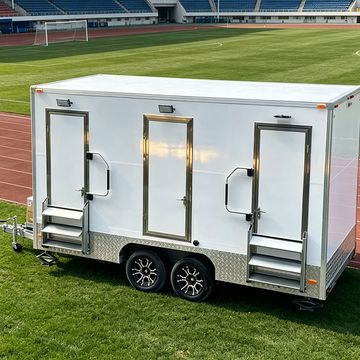
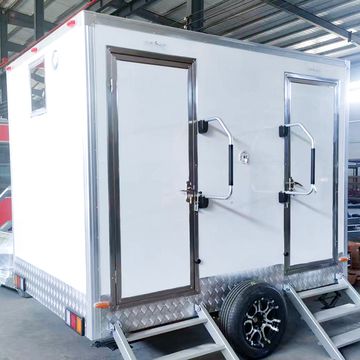
Welfare 300
10 ft site welfare unit: mess area seating 5 to 6, a separate WC, and a heated drying area on one braked chassis.
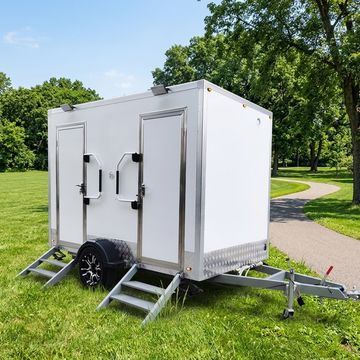
Welfare 360
12 ft site welfare unit: mess area seating 6 to 8, a separate WC, and a heated drying area on one braked chassis.
Welfare 420
14 ft site welfare unit: mess area seating 8 to 10, a separate WC, and a heated drying area on one braked chassis.
Before you pay
The approval route comes first
A unit that cannot be registered where it is going cannot be used there. So the route is established first, in writing, and each country's route is published with the regulator's own source and the date it was read.
Getting it registered in Australia
Import approval before the unit is shipped under the Road Vehicle Standards Act 2018, entry on the Register of Approved Vehicles before it is first supplied, and separately certified gas and electrical equipment. Which route applies to your unit is established in writing before you pay, with the authority and the documents named. The route for Australia, with the regulator's own source and the date it was read.

Questions
Asked before an order, not after
How cool will it be inside?
That is answered against your ambient and your plant, in writing, before you order. A general figure would be a guess and it would be the first thing you tested.
Can it include a toilet?
Yes, as a separate compartment with its own door and hand wash. Where a crew also needs showers, an ablution block alongside is usually the better arrangement.
Does it work off grid?
Yes, with a generator or a hybrid sized against the actual load schedule, including the cooling plant.
Australia
What is different here
What is true here and not in the United Kingdom. 5 things that decide a specification in this market and do not apply in the other one, each with the instrument or the authority it was read from.
Decides the unit
01Three masses, and two of them cannot be put on a weighbridge
Vehicle Standards Bulletin 1, Revision 6, defines tare mass as the trailer with no load, fluid reservoirs at nominal capacity, ready for service with all standard equipment and options fitted, including the mass imposed on the towing vehicle. Gross trailer mass is the mass transmitted to the ground by the trailer's tyres when coupled and fully loaded. Aggregate trailer mass is the total mass fully loaded, including the mass imposed on the towing vehicle. The bulletin is explicit that ATM and GTM are manufacturer specified ratings and cannot be measured on a weighbridge.
What it changes. The difference between ATM and GTM is the load carried by the coupling, which is what the tow vehicle has to accept. Two of the three numbers on the plate are declarations rather than measurements, so the evidence behind them is the drawing and the compliance work rather than a ticket.
Read from Vehicle Standards Bulletin 1, Revision 6, August 2026 2026-09-09
The site facilities duty is written in a regulation and expanded in a code, and the code is the useful half
Regulation 41 of the model Work Health and Safety Regulations requires adequate and accessible facilities, including toilets, drinking water, washing and eating facilities, in good repair and readily accessible. The model Code of Practice on managing the work environment and facilities is where the content sits: what adequate means for the number of workers, the nature of the work and the risks.
What it changes. It is the mirror image of the British position, where the duty names functions and the code has no ratios. Here a specification argues from the Code, which is why a unit for an Australian site is sized against the crew and the shift in the Code's own terms.
Read from What Australian law asks of site facilities, with each provision and read date 2026-09-05
Heat is a design input here, not a comfort question
A crib room, an ablution block and a hot line all have to work on the day the ambient is highest rather than on the day it is mildest. Refrigeration rated for a showroom is not rated for a yard in February, extraction sized for a temperate kitchen starves in one that is already at forty, and a mess area without shade and cooling is a facility on paper.
What it changes. It changes the equipment schedule rather than the trim. Cold chain, ventilation and the power to run both at once are specified against the worst day the unit will work, and that day is a different day here.
Read from Our own specification rule. It follows from the equipment ratings rather than from an instrument. 2026-09-09
Decides the business
04Four trailers a year through the concessional route, and then a different route entirely
Trailers with an aggregate trailer mass of 4.5 tonnes or less need an approval before they can be provided to the Australian market, and they are expected to comply with the applicable Australian Design Rules. A manufacturer or importer may apply for a concessional Register of Approved Vehicles entry for up to four low ATM trailers in a twelve month period, entered vehicle by vehicle. Above that the route is a vehicle type approval, which is a different piece of work with different evidence.
What it changes. It is a constraint on the business rather than on the unit, and it is the reason a fleet order for Australia is planned as a type approval from the first conversation rather than discovered as a cap on the fifth trailer.
Read from Low ATM trailers, Department of Infrastructure 2026-09-04
The first importer becomes the Responsible Supplier, and an overseas company cannot be one
Under the Electrical Equipment Safety System the first importer of in scope electrical equipment is the Responsible Supplier, and to register they must be an Australian or New Zealand legal entity holding an ABN or a New Zealand IRD number. An overseas based company cannot be registered. There is one Authorised Officer for each Responsible Supplier entity.
What it changes. It decides who imports before it decides what is imported. Either the buyer holds it, or a local entity does, and that is a commercial structure to settle at the start rather than a form to fill at the port.
Read from EESS, manufacturers and importers as Responsible Suppliers 2026-09-08
Specify a crib room
Break headcount, ambient temperature and how the unit reaches site.