


Reference
Martyn's Law, for an event with traders on it
Six criteria decide whether your event is in scope, five things are asked of it if it is, and none of them is asked of the units standing on your pitch.
Written for the person who has to pass it on. An organiser with forty traders arriving at six in the morning has six Home Office factsheets and the same conversation forty times, and the useful thing is one page that answers it in the words the exhibitor pack can carry.
Not yet in force. The Act received Royal Assent on 3 April 2025 and the Home Office states the implementation period will be at least 24 months from that date. No commencement order has been made, so none of this applies yet.
Paraphrased from the Home Office's own factsheets under the Open Government Licence: Overarching factsheet read 2026-09-08 · Scope: events read 2026-09-09 · Standard duty requirements read 2026-09-09 · Enhanced duty requirements read 2026-09-09. It is not legal advice.
Is your event in scope
Six criteria, and an event has to meet all of them
All six, not any of them. Most of what gets called an event fails at least one.
| It takes place at premises | A building, other land, or both. Part of a building or a group of buildings counts. No requirement about material or size. |
|---|---|
| The premises are not already enhanced tier | If the venue is already enhanced tier premises, the duty sits with whoever controls the venue and the event does not qualify separately. |
| It is accessible to the public | The public must be able to attend in principle, even if tickets sell out. A wedding reception or a corporate event closed to the public is not in scope. |
| 800 or more may reasonably be expected at the same time | Including staff. Only the part of the premises connected with the event counts, and the threshold does not have to be met throughout: a day festival expecting 500 until six and 1,000 after meets it. |
| There are specific entry controls | A check that an attendee has paid, holds a ticket or pass, or is a member or guest of a club. A wristband, a QR code or a turnstile all count. A dress code does not, and neither does a suggested donation. |
| The premises are not excluded | Schedule 2 excludes the Houses of Parliament, the devolved legislatures and governments, and transport premises already subject to equivalent requirements. |
What it asks
Five things, and a qualifying event carries all of them
Every qualifying premises and event carries notification and public protection procedures. A qualifying event carries the enhanced set as well, which is the same list the largest venues carry.
| Notify the SIA | When you become responsible, when you cease to be, and when anything previously notified stops being accurate. The time and format come from regulations that are not yet made. |
|---|---|
| Designate a senior individual | Where the responsible person is an organisation rather than a person. Somebody who manages or controls its affairs, not a junior with a title. They can delegate the work and cannot delegate the responsibility. |
| Public protection procedures | Four types, so far as is reasonably practicable: evacuation, invacuation, lockdown and communication. People working at the event have to be made aware of them, because a procedure nobody knows is not a procedure. |
| Public protection measures | Four types, and these are about reducing vulnerability rather than reacting: monitoring, movement, physical safety and security, and security of information. They may be people, processes or physical. |
| Document it | Kept up to date, given to the SIA as soon as reasonably practicable after it is first prepared, and within 30 days of any revision. |
The four procedures
Reacting to an attack.
| Evacuation | Getting people away from danger by moving them out of the event, or part of it. |
|---|---|
| Invacuation | Moving people to somewhere within the event where there is less risk. That can mean bringing people in from outside. |
| Lockdown | Securing the event to stop people entering or leaving, by locking, shuttering or using available barriers. |
| Communication | Getting information to people at the event: alerting them, and telling them to stay or to move. |
The four measures
Reducing the chance of one.
| Monitoring | Detecting suspicious activity and items. Anything from circulating awareness material to CCTV. |
|---|---|
| Movement | Controlling how people move into, out of and within the event. Observation on entry, searching, barriers. |
| Physical safety and security | Stand-off zones, safety glass, hostile vehicle mitigation. |
| Security of information | Keeping floor plans and operational detail from being widely available. |
What it does not ask for
Three limits on the duty
It does not require you to alter the premises or buy equipment. The Home Office says so directly about the procedures. It may be reasonably practicable to do either in a particular case, and that is a judgement about your event rather than a rule.
It does not reach an event below 800. An event expecting fewer than that at any one time is not a qualifying event, and no part of this applies to it.
It does not make a trader on your pitch a duty holder. The responsible person is whoever is responsible for the event. A caterer, a bar or a welfare supplier standing inside it is not separately in scope.
On your pitch
What it means for a trader on your pitch
A trader is not the responsible person and does not notify anybody. What they are is a group of people working at the event, and the Act says people working at the event must be made aware of the procedures so they can follow them.
That is a distribution problem rather than a compliance one, and it belongs to the organiser. Forty traders arriving at six in the morning, each with two staff who have never seen your site, are forty conversations unless the pack does the work.
The useful move is to put the four procedures in the exhibitor pack in the same words every year, name where the muster point is on the site plan, and say who calls a lockdown. A trader can then brief their own staff before they arrive rather than in a queue at the gate.
What to ask each trader for
| Who is on the pitch | Names or a count of staff working the unit, so the organiser knows who has to be made aware. |
|---|---|
| A phone that is answered | One number for the person on the unit during trading, not a head office switchboard. |
| Confirmation they have read the procedures | A line in the exhibitor agreement is enough. The obligation is to make people aware, and a record that you did is the evidence. |
| Nothing about the unit itself | There is no equipment, certificate or specification this Act asks of a trailer. Anyone selling you one on these grounds is selling you something else. |
The unit
And what the unit itself has to do
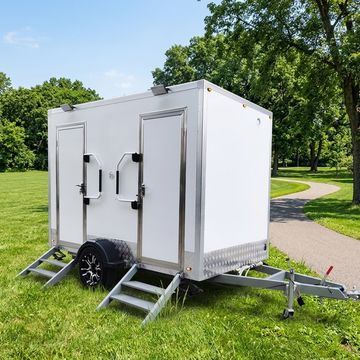
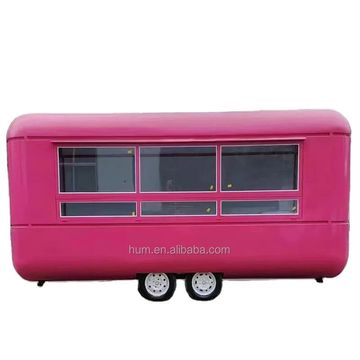
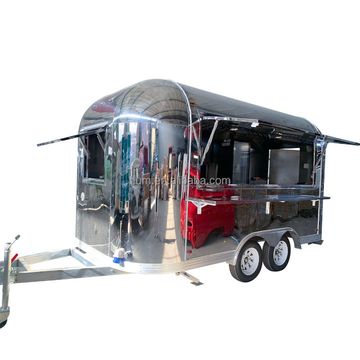
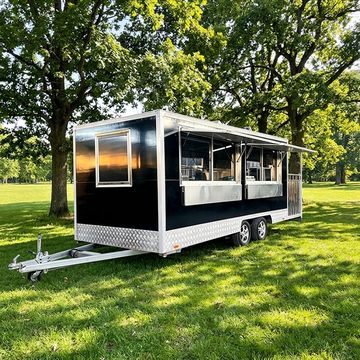
Nothing under this Act. A towable unit standing on a pitch has real obligations and they come from elsewhere: hygiene law about what it contains, gas and electrical rules about how it is maintained, and the towing limits about how it got there. They are kept separate from this one because they attach to a different party.
What the law does ask of a mobile unit is on food hygiene law, what it asks once the unit is working is on after delivery, and what may lawfully tow it is on towing limits. The dates all of it lands on are on the timetable.
Citing this
MODUWRIGHT. "Martyn's Law, for an event with traders on it." Read 2026-09-09. http://127.0.0.1:8812/events-and-martyns-law
Free to quote, reproduce or set as reading, in whole or in part, on one condition: name the source and link to it. If a row is wrong, tell us and it is corrected.
Set this as an exercise
Events management, hospitality operations- A free community festival expects 1,200 people, has no ticketing, and asks for a suggested donation at the gate. Work through the six criteria and say whether it is a qualifying event, naming the criterion that decides it.
- A qualifying event carries the enhanced requirements, the same list the largest venues carry. Explain why an event of 800 is treated that way while premises of 800 are enhanced only if that number is expected from time to time, and what the difference means for a one day show.
- The Act requires no physical alteration and no purchase of equipment, yet an organiser must have public protection measures in place, one type of which is physical safety and security. Reconcile those two statements and explain what reasonably practicable is doing in the sentence.
Free to set as coursework, print, adapt or put on a slide, on one condition: name the source and link to it. What else is free to teach from.