

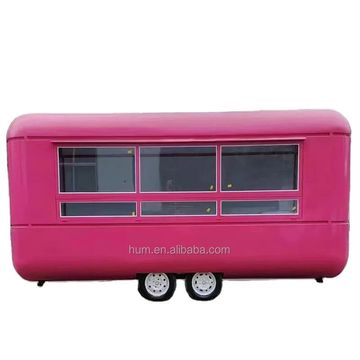
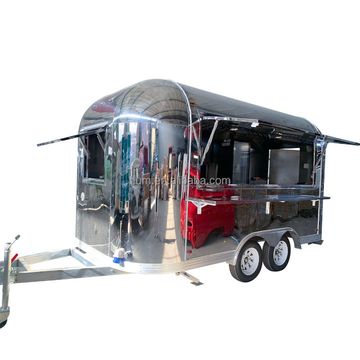
Australia
Food trailers for sale in QLD
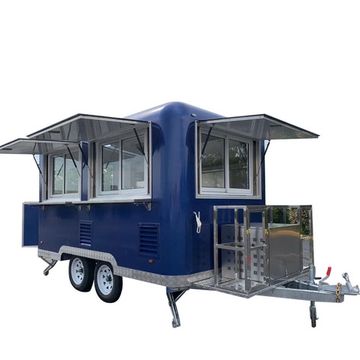
A food trailer for sale in QLD has to clear two separate things, an entry on the Register of Approved Vehicles before first supply and a Queensland local government food business licence for the way you intend to trade, and they are not the same process.
The vehicle side is national. A trailer needs an entry on the Register of Approved Vehicles before it is first supplied, under the Road Vehicle Standards Act 2018, and equipment certification has to be done at manufacture rather than after the unit lands.
The food side is local. A mobile food business in Queensland is licensed by the local government area you are based in, and the fitting out requirements you will be assessed against are the ones that apply to a mobile food premises. We build to those requirements. The licence itself is yours to hold, because it attaches to the operator rather than to the trailer.
What we do and what stays with you
| Vehicle approval route | Ours. Established in writing before you pay, with the authority and the documents named |
|---|---|
| Equipment certification | Ours, and done at manufacture, because it cannot be added afterwards in this country |
| Build to the food premises requirements | Ours. Surfaces, wash arrangement, water and waste built to what a mobile food premises is assessed against |
| Local government food licence | Yours. It attaches to the operator and the trading pattern, not to the trailer |
| Registration and plates | Yours, on the route we established, with the documentation for it confirmed before an order is accepted |
| Delivery | Ours, to a Queensland address, with the handover documentation confirmed before an order is accepted |
The range
Units this is usually built from
Every one is built to an order and configured to the specification agreed with you. Nothing here is stock.
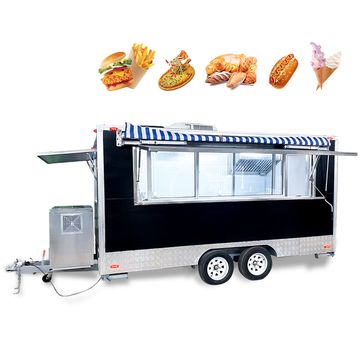
Kitchen 300
The street-food standard: one hot line under extraction, cold storage below.
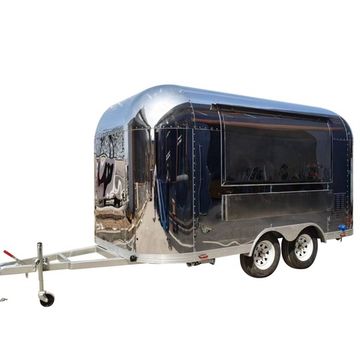
Coffee 220
The single-operator coffee unit: two-group machine, grinder, treated water.
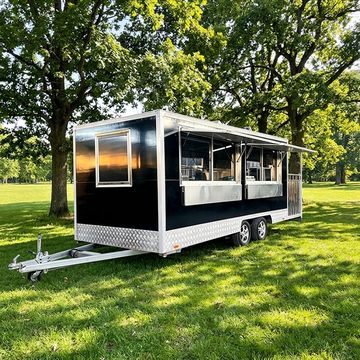
Street food 300
Griddle and fryer together, with the suppression that combination requires.
Before you pay
The approval route comes first
A unit that cannot be registered where it is going cannot be used there. So the route is established first, in writing, and each country's route is published with the regulator's own source and the date it was read.
Getting it registered in Australia
Import approval before the unit is shipped under the Road Vehicle Standards Act 2018, entry on the Register of Approved Vehicles before it is first supplied, and separately certified gas and electrical equipment. Which route applies to your unit is established in writing before you pay, with the authority and the documents named. The route for Australia, with the regulator's own source and the date it was read.

Questions
Asked before an order, not after
Do you have a depot in Queensland?
No. Units are delivered to your address in Queensland.
Who gets the food licence?
You do. It attaches to the operator and to how you trade. We build the unit to what a mobile food premises is assessed against and the documentation that supports it is confirmed before an order is accepted.
Australia
What is different here
What is true here and not in the United Kingdom. 6 things that decide a specification in this market and do not apply in the other one, each with the instrument or the authority it was read from.
Decides the unit
01Three masses, and two of them cannot be put on a weighbridge
Vehicle Standards Bulletin 1, Revision 6, defines tare mass as the trailer with no load, fluid reservoirs at nominal capacity, ready for service with all standard equipment and options fitted, including the mass imposed on the towing vehicle. Gross trailer mass is the mass transmitted to the ground by the trailer's tyres when coupled and fully loaded. Aggregate trailer mass is the total mass fully loaded, including the mass imposed on the towing vehicle. The bulletin is explicit that ATM and GTM are manufacturer specified ratings and cannot be measured on a weighbridge.
What it changes. The difference between ATM and GTM is the load carried by the coupling, which is what the tow vehicle has to accept. Two of the three numbers on the plate are declarations rather than measurements, so the evidence behind them is the drawing and the compliance work rather than a ticket.
Read from Vehicle Standards Bulletin 1, Revision 6, August 2026 2026-09-09
Gas certification has to exist at manufacture, and a CE mark is not it
It is an offence in every state and territory to sell or offer a Type A gas appliance that is not certified by an authorised Conformity Assessment Body. The certification must exist at the time of manufacture and cannot be added afterwards, and CE and CSA certification are explicitly not sufficient.
What it changes. The appliance is chosen before the unit is built or it is not chosen at all. An uncertified hot line does not make a unit late in Australia, it makes it unsellable there, which is a different category of problem from a missing document.
Read from Energy Safe Victoria, gas appliances and online sales 2026-09-04
Decides the business
03Four trailers a year through the concessional route, and then a different route entirely
Trailers with an aggregate trailer mass of 4.5 tonnes or less need an approval before they can be provided to the Australian market, and they are expected to comply with the applicable Australian Design Rules. A manufacturer or importer may apply for a concessional Register of Approved Vehicles entry for up to four low ATM trailers in a twelve month period, entered vehicle by vehicle. Above that the route is a vehicle type approval, which is a different piece of work with different evidence.
What it changes. It is a constraint on the business rather than on the unit, and it is the reason a fleet order for Australia is planned as a type approval from the first conversation rather than discovered as a cap on the fifth trailer.
Read from Low ATM trailers, Department of Infrastructure 2026-09-04
The first importer becomes the Responsible Supplier, and an overseas company cannot be one
Under the Electrical Equipment Safety System the first importer of in scope electrical equipment is the Responsible Supplier, and to register they must be an Australian or New Zealand legal entity holding an ABN or a New Zealand IRD number. An overseas based company cannot be registered. There is one Authorised Officer for each Responsible Supplier entity.
What it changes. It decides who imports before it decides what is imported. Either the buyer holds it, or a local entity does, and that is a commercial structure to settle at the start rather than a form to fill at the port.
Read from EESS, manufacturers and importers as Responsible Suppliers 2026-09-08
The Queensland licence application names the registration plate and an address where the unit can be inspected
Section 53 of the Food Act 2006 requires an application for mobile premises to state a description of the premises including, where the premises are a vehicle required to be registered, the registration number of that vehicle, and an address in the area of the local government being applied to at which the premises may be inspected. Section 265 puts the issuing council, the licence number, the expiry and that registration number on a register the chief executive keeps.
What it changes. Registration comes before the food licence rather than beside it, and the unit has to be somewhere it can be presented in the issuing council's area. A build that is late to registration is late to trading by the same number of weeks, whatever the kitchen looks like.
Read from Food Act 2006 (Qld), sections 53, 264 and 265 2026-09-09
Decides the operation
06In Queensland one council licenses the unit and every other council can inspect it but cannot touch the licence
Under the Food Act 2006, an application for a food business carried on from mobile premises goes to any local government for an area in which the business intends to operate. The Act then calls that one the first local government and every other one a second local government. A second local government has the same powers the first would have had, except that it may not cancel, suspend, impose conditions on, or take any other similar action in relation to the licence. It may only advise the first.
What it changes. The choice of issuing council is a real decision rather than an administrative one, because it fixes who can suspend the operation and who can only report it. It is made once, at application, and it follows the unit for the life of the licence.
Read from Food Act 2006 (Qld), sections 52, 89 to 92 2026-09-09
Specify a unit for Queensland
Menu, covers at peak and the local government area you will trade in.