

Australia
Coffee carts and trailers for sale
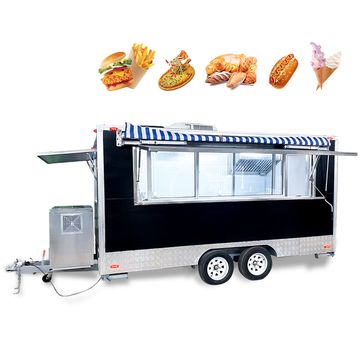
A coffee cart for sale here is drawn around the machine, the grinder and the water treatment first, because those three decide the counter length, the plumbing and the electrical design of everything else.

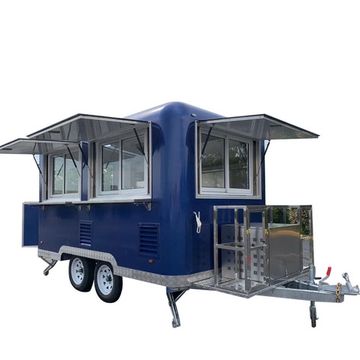
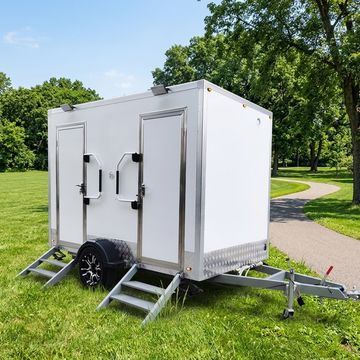
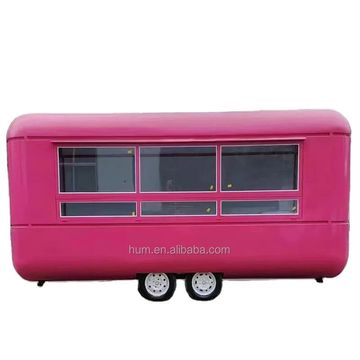
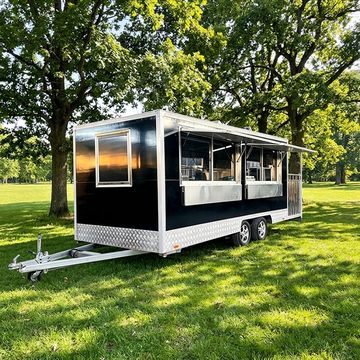
Cart and trailer answer different questions. A cart is wheeled into a foyer, a market or an event floor and lives on a supplied circuit. A trailer is towed, registered and independent, and it needs an approval route the cart does not.
The specification conversation is the same either way. Group count and grinder first, water treatment against the supply at the sites you will actually work, then the counter set to one operator or two.
What the machine decides
| Group count | Two group or three group, which sets the counter length and the supply together |
|---|---|
| Water treatment | Specified against the supply at the sites you will actually work |
| Supply | Single phase, or three phase where the total connected load requires it |
| Counter | Set to one operator or two, with the queue side decided before the frame is built |
| Refrigeration | Under counter, sized to the milk volume of a peak service |
| Registration | A towed unit needs an approval route and a cart does not, which is decided at the start |
The range
Units this is usually built from
Every one is built to an order and configured to the specification agreed with you. Nothing here is stock.
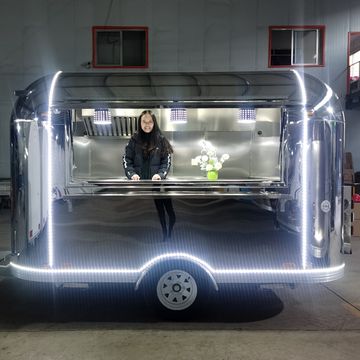
Coffee 220
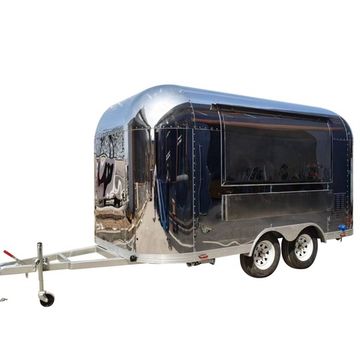
The single-operator coffee unit: two-group machine, grinder, treated water.
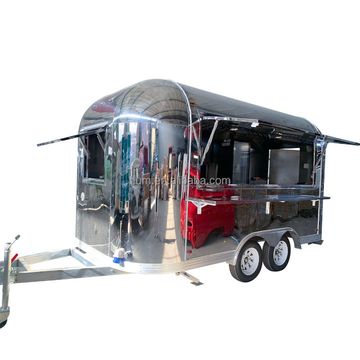
Coffee 300
A three-group machine with room for a pastry counter and a second person.
Dessert 220
Soft serve and freezer capacity, on a floor built for the load.
Before you pay
The approval route comes first
A unit that cannot be registered where it is going cannot be used there. So the route is established first, in writing, and each country's route is published with the regulator's own source and the date it was read.
Getting it registered in Australia
Import approval before the unit is shipped under the Road Vehicle Standards Act 2018, entry on the Register of Approved Vehicles before it is first supplied, and separately certified gas and electrical equipment. Which route applies to your unit is established in writing before you pay, with the authority and the documents named. The route for Australia, with the regulator's own source and the date it was read.

Questions
Asked before an order, not after
Cart or trailer?
A cart if it is wheeled in and plugged in. A trailer if it is towed, because then it needs registration and an approval route. Tell us where it will work and the answer is usually obvious.
Two group or three?
That follows from covers at peak and how many work the counter, not from budget.
Australia
What is different here
What is true here and not in the United Kingdom. 5 things that decide a specification in this market and do not apply in the other one, each with the instrument or the authority it was read from.
Decides the unit
01Three masses, and two of them cannot be put on a weighbridge
Vehicle Standards Bulletin 1, Revision 6, defines tare mass as the trailer with no load, fluid reservoirs at nominal capacity, ready for service with all standard equipment and options fitted, including the mass imposed on the towing vehicle. Gross trailer mass is the mass transmitted to the ground by the trailer's tyres when coupled and fully loaded. Aggregate trailer mass is the total mass fully loaded, including the mass imposed on the towing vehicle. The bulletin is explicit that ATM and GTM are manufacturer specified ratings and cannot be measured on a weighbridge.
What it changes. The difference between ATM and GTM is the load carried by the coupling, which is what the tow vehicle has to accept. Two of the three numbers on the plate are declarations rather than measurements, so the evidence behind them is the drawing and the compliance work rather than a ticket.
Read from Vehicle Standards Bulletin 1, Revision 6, August 2026 2026-09-09
Gas certification has to exist at manufacture, and a CE mark is not it
It is an offence in every state and territory to sell or offer a Type A gas appliance that is not certified by an authorised Conformity Assessment Body. The certification must exist at the time of manufacture and cannot be added afterwards, and CE and CSA certification are explicitly not sufficient.
What it changes. The appliance is chosen before the unit is built or it is not chosen at all. An uncertified hot line does not make a unit late in Australia, it makes it unsellable there, which is a different category of problem from a missing document.
Read from Energy Safe Victoria, gas appliances and online sales 2026-09-04
One toasted sandwich moves a coffee unit into a different standard
The NSW Food Authority states that coffee vendors selling only hot drinks and packaged food carry minimal requirements, that Standard 3.2.2A does not apply to them, and that they do not need to appoint a Food Safety Supervisor. It then states that both apply to a coffee vendor selling food that is unpackaged, potentially hazardous and ready to eat, and that the supervisor's certificate has to be in the vehicle before operation.
What it changes. The menu decides the regulatory class before the unit is drawn. Temperature control, the record keeping and a named supervisor arrive together with the first made to order hot item, and retrofitting the cold chain and the handwash to a cart specified for espresso is more expensive than specifying for it once.
Read from Mobile food vendors, NSW Food Authority 2026-09-09
Decides the business
04Four trailers a year through the concessional route, and then a different route entirely
Trailers with an aggregate trailer mass of 4.5 tonnes or less need an approval before they can be provided to the Australian market, and they are expected to comply with the applicable Australian Design Rules. A manufacturer or importer may apply for a concessional Register of Approved Vehicles entry for up to four low ATM trailers in a twelve month period, entered vehicle by vehicle. Above that the route is a vehicle type approval, which is a different piece of work with different evidence.
What it changes. It is a constraint on the business rather than on the unit, and it is the reason a fleet order for Australia is planned as a type approval from the first conversation rather than discovered as a cap on the fifth trailer.
Read from Low ATM trailers, Department of Infrastructure 2026-09-04
The first importer becomes the Responsible Supplier, and an overseas company cannot be one
Under the Electrical Equipment Safety System the first importer of in scope electrical equipment is the Responsible Supplier, and to register they must be an Australian or New Zealand legal entity holding an ABN or a New Zealand IRD number. An overseas based company cannot be registered. There is one Authorised Officer for each Responsible Supplier entity.
What it changes. It decides who imports before it decides what is imported. Either the buyer holds it, or a local entity does, and that is a commercial structure to settle at the start rather than a form to fill at the port.
Read from EESS, manufacturers and importers as Responsible Suppliers 2026-09-08
Specify a coffee unit
Machine preference, covers at peak and where it will work.